Featured Species
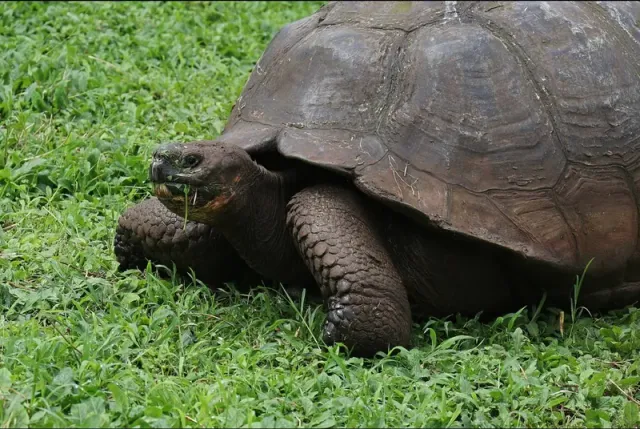
Galápagos Giant Tortoise
It can live for more than 150 years and weigh up to 400 kg. Differences in the shape of its shell inspired Darwin.
Vulnerable
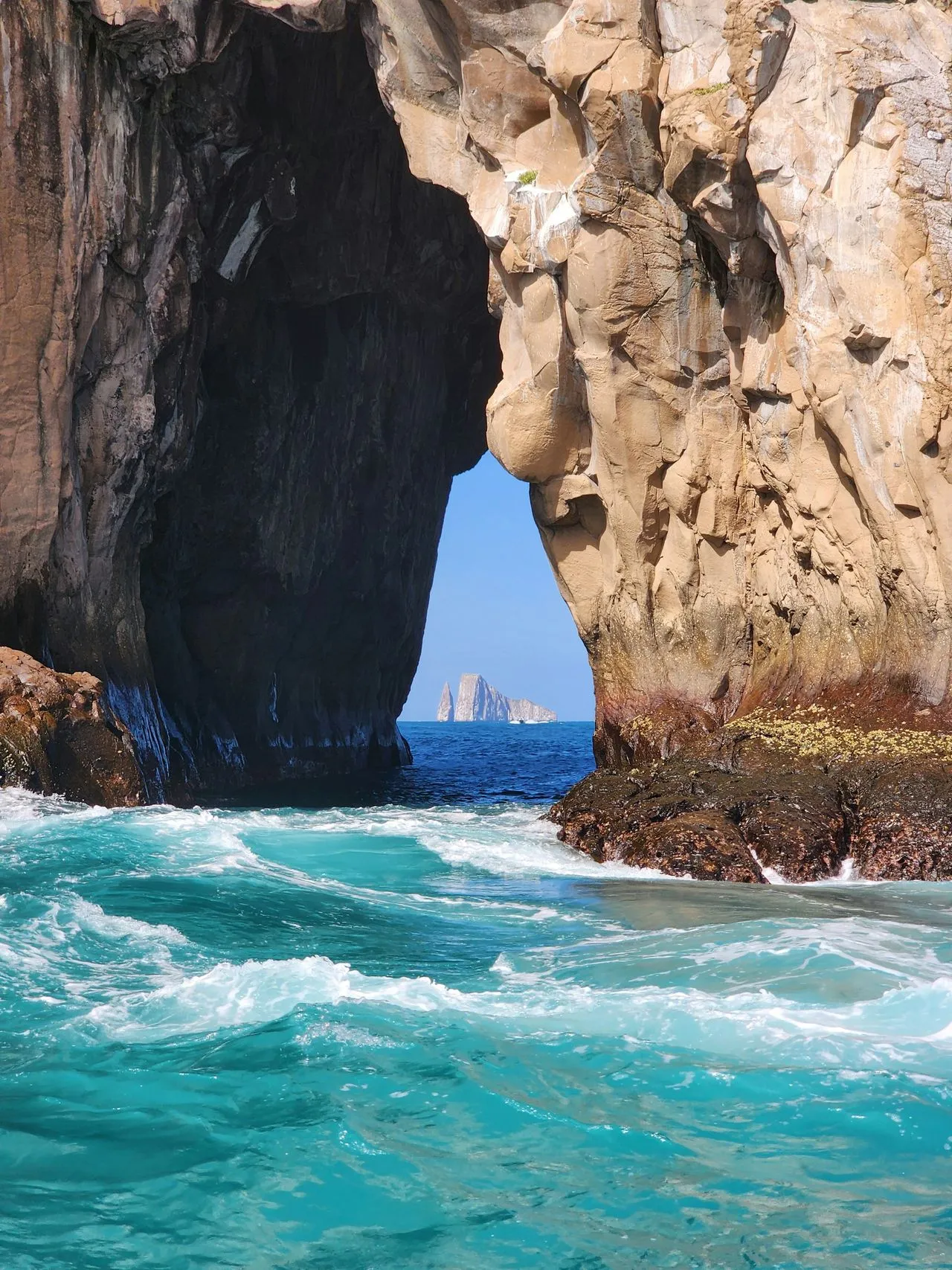
Galápagos Islands · Humanity’s Natural Heritage
A volcanic archipelago in the middle of the Pacific that protects creatures unique on Earth — from centenarian tortoises to birds that forgot how to fly.
Explore species ↓Biodiversity
From centenarian tortoises to birds that dance to court a mate. Every species is a piece of the evolutionary puzzle.
It can live for more than 150 years and weigh up to 400 kg. Differences in the shape of its shell inspired Darwin.
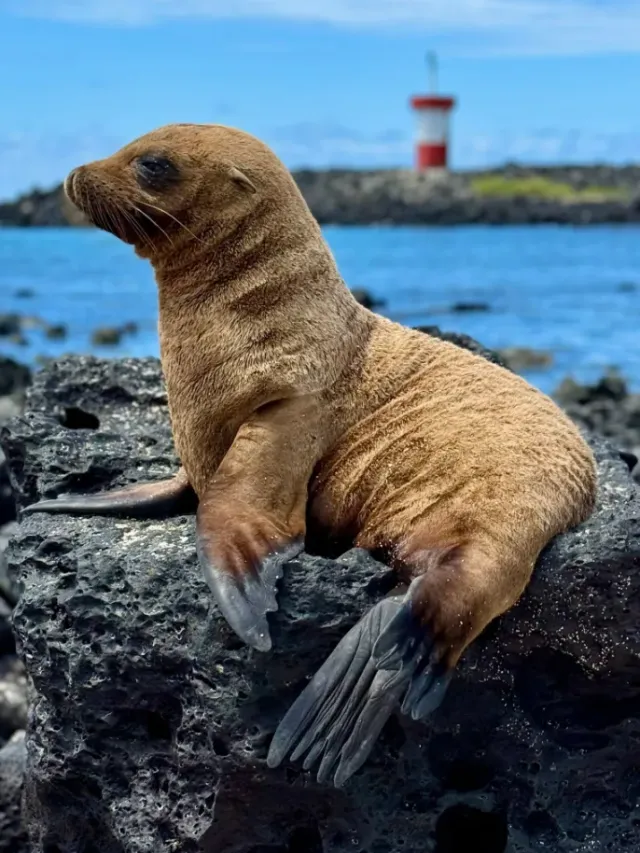
It lives in noisy colonies on beaches and coastal rocks. Its diet depends on cold, nutrient-rich waters, so El Niño events hit the species hard.
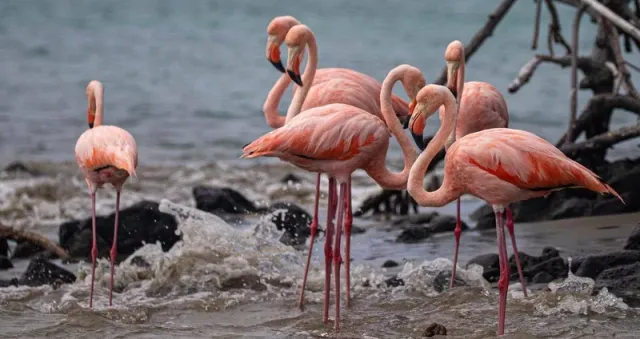
A small, isolated population lives in the archipelago’s brackish lagoons, dependent on increasingly scarce coastal wetlands.
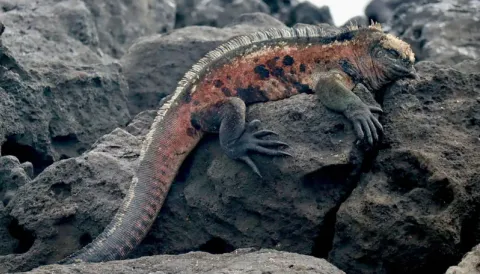
The only lizard in the world that feeds in the sea.
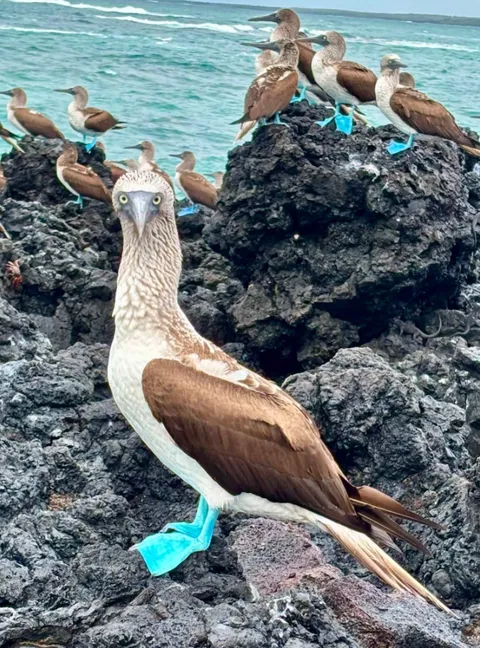
Its courtship dance with intensely blue feet is a unique spectacle.
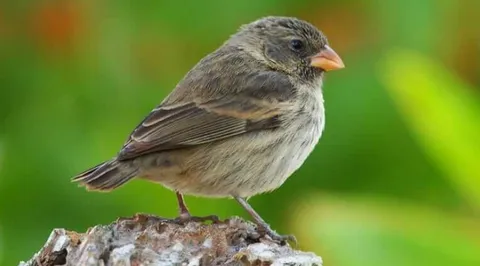
13 distinct species, each beak adapted to a different food source.
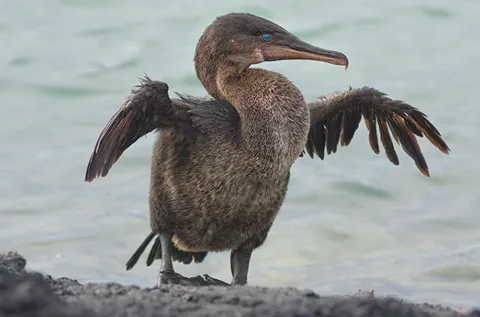
It lost the ability to fly. Its vestigial wings are unique among cormorants.
Natural Heritage
Thirteen major volcanic islands rise at the confluence of three ocean currents — the cold Humboldt, the warm Panama, and the deep Cromwell — colliding in the middle of the Pacific and creating one of the richest evolutionary laboratories on the planet.
Galápagos exists thanks to active conservation. The Charles Darwin Foundation sustains scientific research and protection programs across the archipelago from its station in Santa Cruz.
Five centuries
Nobody was looking for these islands. They appeared in the path of a drifting ship and ended up rewriting what humanity believed about the origin of life.
1535
Friar Tomás de Berlanga was sailing to Peru when the currents dragged him out to sea. Writing to King Charles V, he described an impossible land: “many sea lions, turtles, iguanas, galápagos”. That old Spanish word for tortoise gave the archipelago its name.
1835
Charles Darwin was 26 when he came ashore here. He noticed that finches and tortoises changed shape from one island to the next, and the question haunted him for decades until it became the theory of evolution by natural selection.
1959
On the centenary of “On the Origin of Species”, Ecuador declared 97% of the archipelago’s land surface a national park. It became the country’s first protected area and the start of a watch that has never stopped.
1978
UNESCO inscribed Galápagos among the first twelve World Heritage Sites. The recognition was not for a landscape: it was for an evolutionary laboratory still at work, with processes found nowhere else on the planet.
2012
On 24 June the last Pinta giant tortoise died, after forty years of efforts to save his species. His story ended quietly, but it turned Galápagos into the world’s symbol of everything that can still be protected.
That sustained work keeps 95% of the originally recorded flora and fauna in good condition today. Every visit is part of the same story.
Galápagos is not visited. It is felt.
Read the full story of the archipelago →Archipiélago
Haz clic en cada isla para descubrir sus especies endémicas y características únicas.