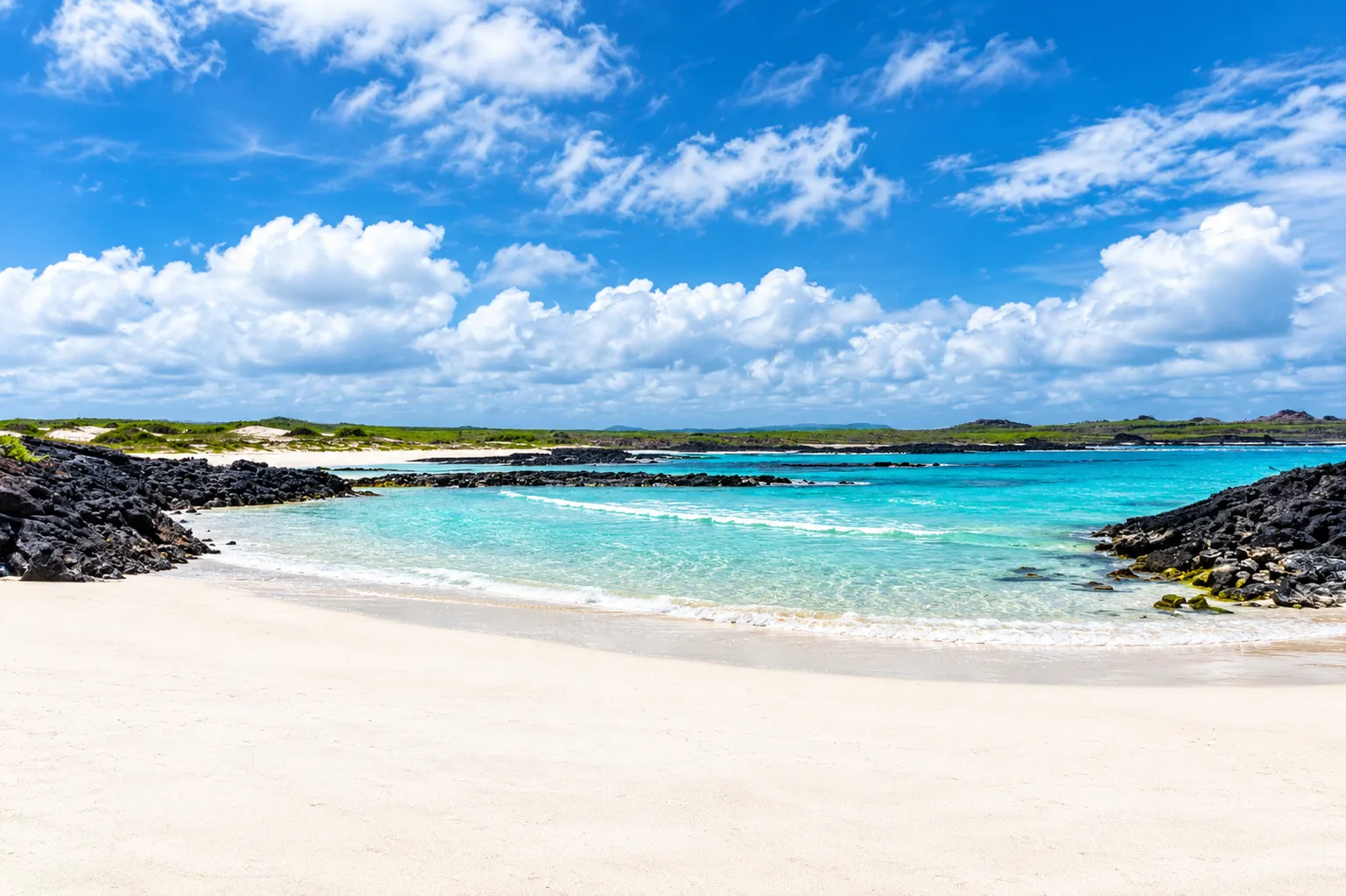
It is a bay with several small beaches: at its centre lies a larger beach with fine white sand and clear, turquoise-toned water, and the surroundings combine mangroves, dunes, and small lagoons in a volcanic landscape with cacti of the Opuntia genus. It is usually reached by sea from Puerto Baquerizo Moreno, on a nautical tour. The site includes a pyroclastic cone reached by a short signposted trail documented by the protected-area management authority, and it has snorkel and walking zones used under its management. The bay's waters are part of the marine reserve, a coastal-marine environment studied in biodiversity baseline work. Snorkelling and swimming are among the possible activities, and marine life is always presented as a possibility and never as a guarantee: sharks, rays, and sea turtles may appear in the water. The Galápagos green turtle, Chelonia mydas agassizii, is known in Spanish as tortuga prieta, and Galápagos hosts endemic prickly-pear cactus species of the Opuntia genus.
A visitor site on the east coast of San Cristóbal
Rosa Blanca Bay is a visitor site of the protected area, on the east coast of San Cristóbal island. Its condition as a visitor site places it within the protected area's management: the visit takes place under the rules that govern the site, and the site's snorkel and walking zones are used under the management authority.
Arriving by sea on a nautical tour
Rosa Blanca Bay is usually reached by sea, on a nautical tour departing from Puerto Baquerizo Moreno. The crossing is part of the experience: the bay is first revealed from the water, and arrival takes place within the management framework of the protected area.
A bay with several beaches
The bay comprises several small beaches. At its centre lies a larger beach, described with fine white sand and clear, turquoise-toned water. Around it, the landscape combines mangrove areas and dunes that contrast in colour with the water, small lagoons, and a volcanic environment with cacti of the Opuntia genus.
Essential information
- Identity
- Rosa Blanca Bay, on San Cristóbal
- General location
- East coast of San Cristóbal island
- Site type
- Coastal bay with several small beaches
- Central beach
- A larger beach at the centre of the bay, with fine white sand and clear, turquoise-toned water
- Mangroves, dunes, and lagoons
- Mangrove areas and dunes that contrast in colour with the water, and small lagoons
- Volcanic landscape
- Volcanic landscape with cacti of the Opuntia genus in the surroundings
- Usual access
- Usually reached by sea from Puerto Baquerizo Moreno, on a nautical tour
- Pyroclastic cone
- A pyroclastic cone reached by a short signposted trail documented by the protected-area management authority
- Activities
- Snorkelling and swimming are among the possible activities; there are snorkel and walking zones used under the management authority
- Marine reserve
- The bay's waters are part of the marine reserve, studied in biodiversity baseline work
- Marine life as a possibility
- Sharks, rays, and sea turtles may appear in the water
- Sea turtle
- Galápagos green turtle (Chelonia mydas agassizii), known in Spanish as tortuga prieta
The pyroclastic cone and the site's zones
Among the site's features is a pyroclastic cone, reached by a short signposted trail documented by the protected-area management authority. The site also has snorkel and walking zones used under its management, within the framework of a visit to the protected area.
The volcanic landscape and the cacti
The bay's surroundings combine a volcanic landscape with cacti of the Opuntia genus. Galápagos hosts endemic prickly-pear cactus species, and their presence is part of the place's character, although it cannot be asserted which one occurs at the site.
Marine life, always as a possibility
Snorkelling and swimming appear among the site's possible activities, always as a possibility and never as a guarantee, within the framework of a visit to a protected area.
Sharks, rays, and sea turtles may be present in the water, and none of those presences is assured: they are possibilities of the site, not an offer the bay fulfils on every visit. The Galápagos green turtle, Chelonia mydas agassizii, known in Spanish as tortuga prieta, is part of the marine wildlife the material mentions in the surroundings.
Frequently asked questions
- A visitor site of the protected area on the east coast of San Cristóbal island: a bay with several small beaches.
- By sea, on a nautical tour departing from Puerto Baquerizo Moreno.
- It has several small beaches; at its centre lies a larger beach with fine white sand and clear, turquoise-toned water, with mangroves, dunes, and small lagoons in a volcanic landscape.
- Snorkelling and swimming are among the possible activities, and there are snorkel and walking zones used under the protected-area management authority.
- Sharks, rays, and sea turtles may be present in the water, always as a possibility and never as a guarantee; the Galápagos green turtle (Chelonia mydas agassizii) is known in Spanish as tortuga prieta.
- A volcanic feature of the site, reached by a short signposted trail documented by the protected-area management authority.