Cobos, dedicated to growing and processing sugar cane, whose ruins can be observed today. That period ended in 1904 with a documented episode of violence, which is remembered soberly as part of the site's memory, without becoming its dominant feature. The landscape changes vegetation with altitude relative to the coast and may include epiphytic flora and terrestrial fauna depending on actual conditions. Demographic, administrative, historical production, and specific tourist figures are unconfirmed and require editorial verification before publication.
Climbing from Puerto Baquerizo Moreno towards the island's interior
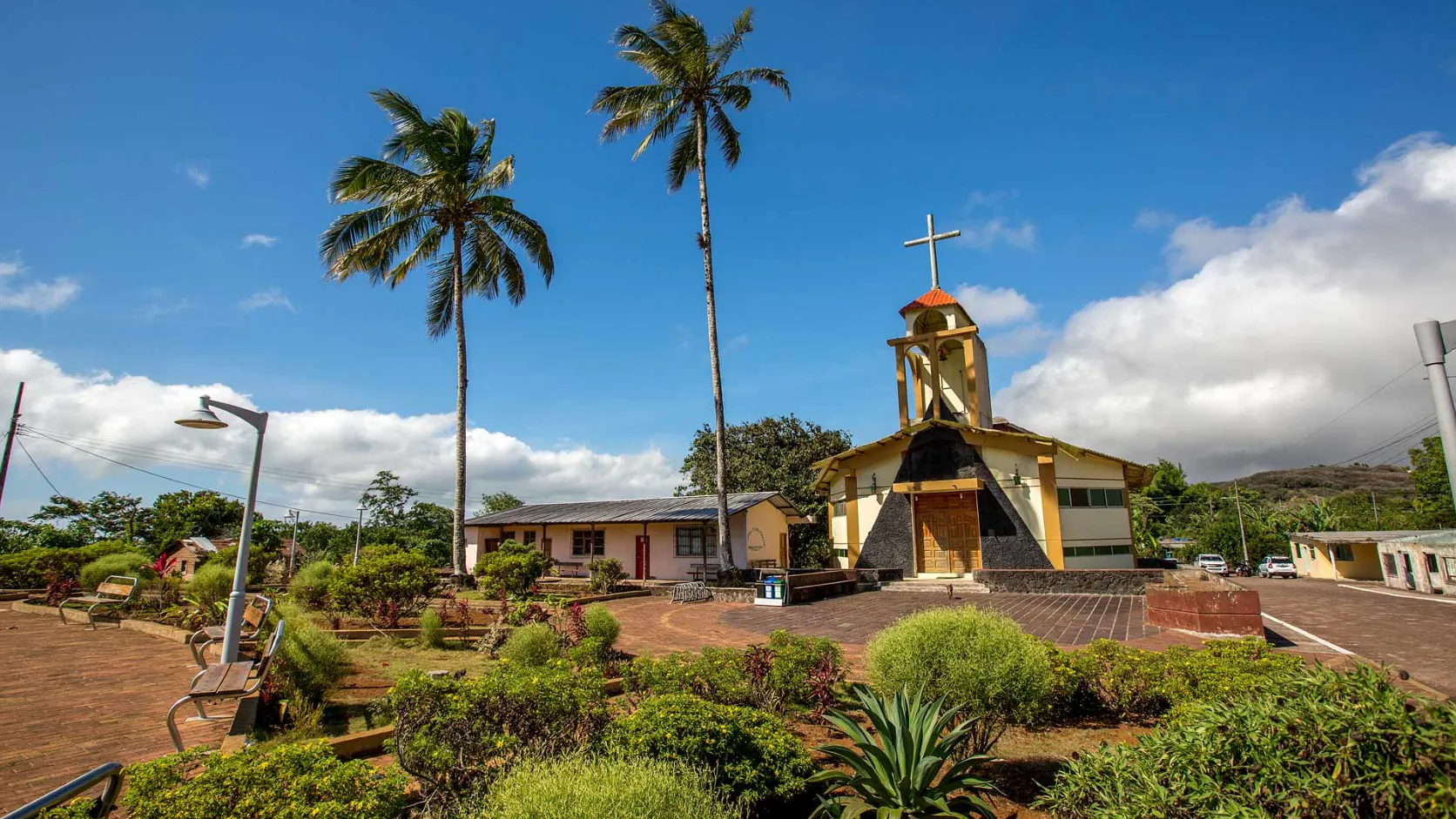
El Progreso is associated with San Cristóbal and is located inland relative to the setting of Puerto Baquerizo Moreno. Access is consistently described as a climb towards the highlands, without this dossier confirming an exact distance, a travel time, or a specific means of transport. Moving forward without relying on a figure allows attention to the change in landscape and to conditions in effect on that day.
The route inland precedes the place as a transition: it leaves the coast behind and approaches territory consistently described as the island's first permanent human settlement. Before arrival, the change in altitude itself already begins to show a landscape different from the coast, without that experience becoming a programmed offer or a promise of a fixed itinerary.
Essential information
- Identity
- El Progreso, in San Cristóbal
- Association
- Inland from the setting of Puerto Baquerizo Moreno
- Presentation
- First permanent human settlement of San Cristóbal
- Agro-industrial memory
- Ruins of a late nineteenth-century agro-industrial hacienda, associated with Manuel J. Cobos
- Historical episode
- That period ended in 1904 with a documented episode of violence
- Landscape and nature
- Vegetation change with altitude; possible epiphytic flora and terrestrial fauna
The place as memory of a first settlement
El Progreso is consistently described among the sources as the first permanent human settlement of San Cristóbal. That condition does not depend on an exact date or a specific demographic figure: it is the reason the place stands as a historical reference within the island, even as many of its administrative and numerical details remain unverified editorially.
Recognising that first settlement helps situate the place before touring it: it is not a curious fact, but the reason the ruins and remains visible today deserve to be treated as heritage and not merely as a backdrop for a visit.
An agro-industrial history and its remains
The place is historically associated with a late nineteenth-century agro-industrial hacienda, founded by Manuel J. Cobos, dedicated to growing and processing sugar cane. Ruins and remains of that hacienda and its mill can be observed today, present as structures that recall that activity, without this dossier confirming production figures, worker numbers, cultivated area, or industrial infrastructure details.
Those ruins are not presented as an isolated attraction, but as part of a single territorial story: that of a settlement that transformed the agricultural landscape of the highlands and left physical traces still recognisable today. Their value is one of memory and preservation, not spectacle.
A documented historical episode, remembered soberly
That agro-industrial stage ended in 1904 with an episode of violence documented with reasonable consistency across sources, in a context of severe labour conditions. The place holds the memory of that history, including a grave and associated remains, without this dossier narrating graphic details or turning the episode into the central reason for a visit.
Mentioning that episode with factual precision and without dramatisation does not exclude it from the site's memory; on the contrary, it recognises that El Progreso combines landscape, nature, and an agro-industrial and historical past that should be held in balance, without any single element displacing the others.
Vegetation and fauna according to altitude
The surroundings change vegetation as altitude increases relative to the coast. Depending on actual conditions at the place and time of the visit, there may be epiphytic flora present, such as orchids, mosses, or lichens, and terrestrial fauna, such as iguanas, land tortoises, or seabirds. This possibility is presented conditionally, without guaranteeing observation or turning it into a promise of a natural itinerary.
The highland landscape complements the place's historical memory without replacing it: land that was once agricultural today coexists with vegetation that follows its own dynamics, and that combination is part of what distinguishes El Progreso within San Cristóbal.
Local traditions, without fixed dates or itineraries
The place may also be associated with local community traditions and festivities, without this dossier fixing dates, itineraries, or exact distances. These references are mentioned as part of the community's current life, always subject to information in effect at the time of a visit, and not as a programmed offer.
Frequently asked questions
- It is a place in San Cristóbal consistently described as the island's first permanent human settlement, with ruins of a late nineteenth-century agro-industrial hacienda.
- The site was associated with a sugar cane agro-industrial hacienda founded by Manuel J. Cobos. That stage ended in 1904 with an episode of violence documented with reasonable consistency across sources, in a context of severe labour conditions. It is mentioned here with factual sobriety, without graphic detail, as part of the site's memory and not as its main attraction.
- Sources consistently describe ruins and remains associated with that hacienda as observable today.
- A climb towards the island's interior is described.
- Depending on altitude and actual conditions, there may be epiphytic flora and terrestrial fauna, without this guaranteeing their observation or fixing a closed list of species.
The return
On leaving El Progreso, the return retraces the same descent towards the setting of Puerto Baquerizo Moreno. That stretch allows the visit to close without depending on a time figure or a specific means of transport, paying attention to the current conditions of the route.
The memory of the visit may retain the change in landscape with altitude, the hacienda's ruins as heritage, the sober mention of the 1904 episode, or the possibility of having seen flora and fauna typical of the highlands. None of these elements replaces the editorial verification of figures, dates, names, or administrative details before any publication.