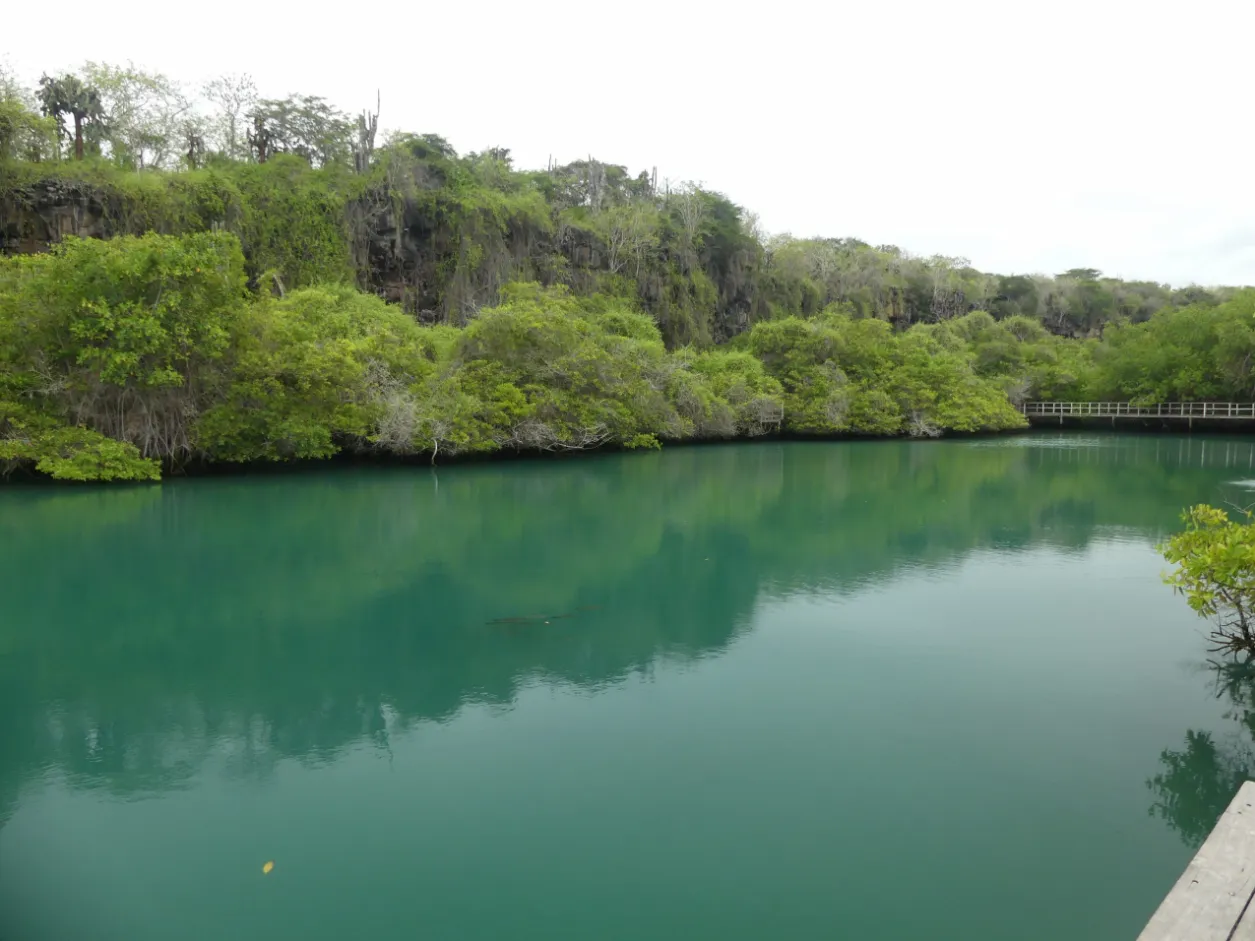
It is surrounded by mangrove, with a consistent presence of white mangrove and red mangrove. The walk follows a wooden walkway with information panels, and the place is meant for contemplation and observation: swimming and water activities such as kayaking are not allowed. There may be birds and aquatic fauna present, always as a possibility subject to actual conditions at the time. The exact number of mangrove species, the lagoon's dimensions, walking distances and lengths, and specific climate figures are not confirmed unanimously across sources and require editorial verification before publication.
Arriving at the Las Ninfas neighbourhood, in Puerto Ayora
The lagoon sits in the urban area of Puerto Ayora, in the Las Ninfas neighbourhood. There is no need to leave the town to reach it: the path starts from ordinary streets and ends, without warning, in front of a sheet of water ringed by green. That contrast is part of the place's surprise: a natural space living alongside everyday houses and streets.
Access is on foot, and a wooden walkway marks the point where the walk begins. Before crossing it, the lagoon is already visible between the mangrove branches, with information panels accompanying the first steps.
Essential information
- Identity
- Laguna de las Ninfas, in Santa Cruz
- Location
- Urban area of Puerto Ayora, Las Ninfas neighbourhood
- Formation
- Brackish-water lagoon, from the mix of seawater and filtered fresh water; salinity varies with the tide
- Plant setting
- Mangrove, with a consistent presence of white mangrove and red mangrove
- Walk
- Wooden walkway with information panels
- Allowed activities
- Contemplation and observation
- Activities not allowed
- Swimming and water activities such as kayaking
- Possible fauna
- Birds and aquatic fauna, depending on actual conditions at the time
The walkway and the meeting of two waters
The walkway runs directly over the lagoon. Under your feet, the water changes with the hour: as the tide rises, the sea comes in; as it falls, ground gives way to fresh water filtering in from land. That constant mixing is what makes this lagoon brackish, and it explains why its colour and its calm shift from one visit to the next.
Walking the walkway means moving between two worlds that touch: the sea arriving from the bay and the land filtering its own water. There is no need to know the chemical detail to notice it; watching the water's reflection change from one stretch to the next is enough.
The mangrove and its roots
Mangrove surrounds the lagoon on every side. Roots sink into the water and the mud, holding up branches that lean over the walkway. Among those roots, red mangrove fruit can be seen floating or stranded on the shore, a sign easy to recognise even without much knowledge of botany.
Mangrove is not just a green backdrop: it filters the water, holds the mud together, and shelters life moving in and out of the lagoon. Every root visible from the walkway tells part of that quiet work.
Birds and possible fauna over the water
Birds may be seen over the lagoon, such as frigatebirds or blue-footed boobies, though no species is guaranteed on any given visit. There may also be aquatic fauna moving under the surface, including fish and, in some cases, sea turtles or rays. None of this is promised: it depends on the day, the hour, and the lagoon itself.
Watching without rushing the pace helps notice that movement: a bird landing for a moment, a reflection shifting under the water. The lagoon rewards the patience of someone who looks before walking on.
A place to watch, not to swim in
Swimming and water activities such as kayaking are not allowed at Laguna de las Ninfas. That rule is not a minor detail: it defines the place as a space for contemplation, meant for walking the walkway and watching, not for entering the water.
That stillness is part of what the lagoon offers. Without swimmers or boats, the water keeps its calm and the mangrove its quiet, and anyone walking the walkway can focus on what they see and hear around them.
Frequently asked questions
- It is a brackish-water lagoon in the urban area of Puerto Ayora, in Santa Cruz, formed by the mix of seawater and filtered fresh water, surrounded by mangrove.
- The walk is on foot along a wooden walkway with information panels, running directly over the lagoon.
- No. Swimming and water activities such as kayaking are not allowed; the place is meant for contemplation and observation.
- Birds such as frigatebirds or blue-footed boobies, and aquatic fauna such as fish, may be seen depending on actual conditions at the time; no species is guaranteed on any given visit.
Closing the walk
The walkway ends where it began, back on the streets of Puerto Ayora. The return allows one last look at the mangrove and the water before leaving the lagoon behind and returning to the town's pace.
What stays from the visit is that mix of two waters, the mangrove surrounding it, and the calm of a place meant for watching. None of these elements replaces the editorial verification of species, dimensions, or distances before any publication.