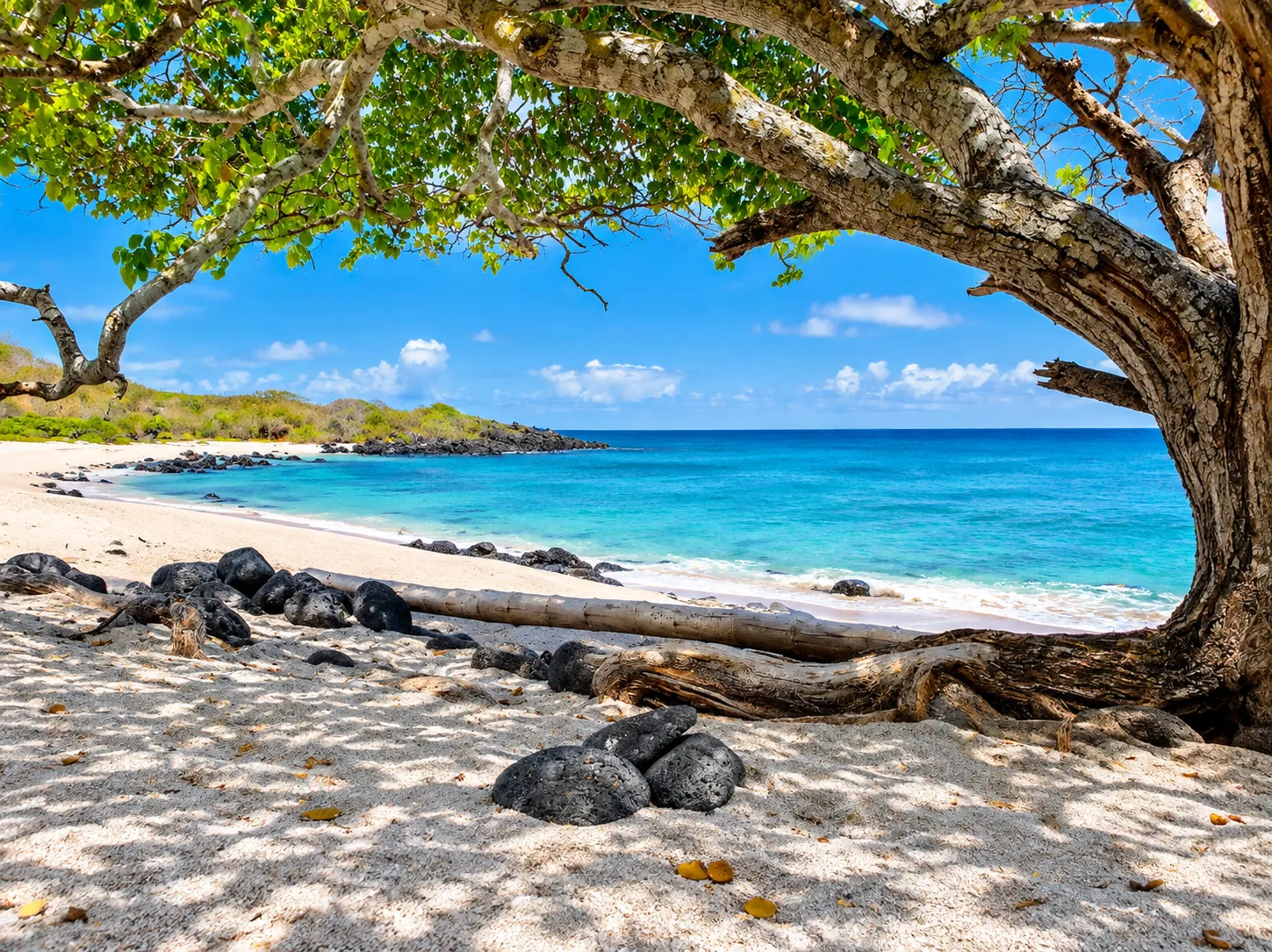
It is usually reached on foot by a trail that crosses the Cerro Tijeretas area, over uneven volcanic terrain, with climbs and descents and among vegetation. Hiking and swimming are among the activities the site is used for, and snorkelling and birdwatching appear as possibilities, within the framework of a visit to a protected area. The surrounding wildlife is presented as a possibility and never as a guarantee: frigatebirds, Darwin's finches, marine iguanas, sea lions, sea turtles, herons, lava lizards, and hermit crabs are among the possible presences of the trail and the cove. The marine iguana is endemic to Galápagos, the Galápagos sea lion is part of the island's coastal fauna, and the frigatebirds present in the archipelago include the magnificent frigatebird and the great frigatebird. The protected-area management authority recorded the site among the island's visitor sites, and maintaining the access trail is part of its park rangers' documented work.
A visitor site on the slopes of Cerro Tijeretas
Baquerizo Beach is a visitor site registered by the protected-area management authority, on the slopes of Cerro Tijeretas, on San Cristóbal island. Its condition as a visitor site places it within the protected area's management: the visit takes place under the rules that govern the site, and maintaining the access trail is part of the park rangers' documented work.
The usual access on foot
Baquerizo Beach is usually reached on foot, by a trail that crosses the Cerro Tijeretas area. The path crosses uneven volcanic terrain, with climbs and descents, and advances among vegetation as far as the cove.
Essential information
- Identity
- Baquerizo Beach, on San Cristóbal
- General location
- Slopes of Cerro Tijeretas, on San Cristóbal island
- Site type
- Small, secluded cove with white sand and clear water
- Usual access
- Usually reached on foot by a trail that crosses the Cerro Tijeretas area
- Trail terrain
- Uneven volcanic terrain with climbs and descents, and vegetation
- Activities
- Hiking and swimming are among the site's activities; snorkelling and birdwatching appear as possibilities
- Wildlife mentioned
- Frigatebirds, Darwin's finches, marine iguanas, sea lions, sea turtles, herons, lava lizards, and hermit crabs
- Marine iguana
- Marine iguana (Amblyrhynchus cristatus), endemic to Galápagos
- Sea lion
- The Galápagos sea lion (Zalophus wollebaeki) as part of the island's coastal fauna
- Frigatebirds
- Magnificent frigatebird (Fregata magnificens) and great frigatebird (Fregata minor), present in Galápagos
- Vegetation
- The vegetation that accompanies the trail
- Marine life as a possibility
- Swimming and snorkelling are possible activities; sea turtles and sea lions may appear in the water and on the shore
The wildlife of the trail and the cove
The trail and the cove are among the settings where frigatebirds, Darwin's finches, marine iguanas, herons, lava lizards, and hermit crabs may appear. None of those presences is guaranteed: they are possibilities of the site, not an offer the place fulfils on every visit.
The marine iguana, Amblyrhynchus cristatus, is a species endemic to Galápagos and is part of the wildlife the material mentions around the site. Its presence, like that of the rest of the place's wildlife, is presented as a possibility and not as the site's current state.
The frigatebirds of Galápagos
Frigatebirds are part of the group of birds the material mentions around the cove. In Galápagos are present the magnificent frigatebird, Fregata magnificens, and the great frigatebird, Fregata minor, seabirds recognisable by their forked tails. Their presence in the area is presented as a possibility, and neither species is singled out as a habitual breeder at the place.
Marine life, always as a possibility
Swimming and snorkelling appear among the site's possible activities, always as a possibility and never as a guarantee, within the framework of a visit to a protected area.
Sea turtles and sea lions, the latter with the scientific name Zalophus wollebaeki, may be present in the water and on the shore, and none of those presences is assured: they are possibilities of the site, not an offer the cove fulfils on every visit.
Frequently asked questions
Frequently asked questions
- A visitor site of the protected-area management authority, on the slopes of Cerro Tijeretas, on San Cristóbal island.
- On foot, by a trail that crosses the Cerro Tijeretas area, over uneven volcanic terrain, with climbs and descents and among vegetation.
- Hiking and swimming are among the activities the site is used for, and snorkelling and birdwatching appear as possibilities, within the framework of a protected-area visit.
- Frigatebirds, Darwin's finches, marine iguanas, sea lions, sea turtles, herons, lava lizards, and hermit crabs are among the species mentioned in the surroundings, always as a possibility and never as a guarantee.
- The magnificent frigatebird (Fregata magnificens) and the great frigatebird (Fregata minor), present in the archipelago and recognisable by their forked tails; neither is singled out as a habitual breeder at this site.
- It is a small, secluded cove, described with white sand and clear, turquoise-toned water.