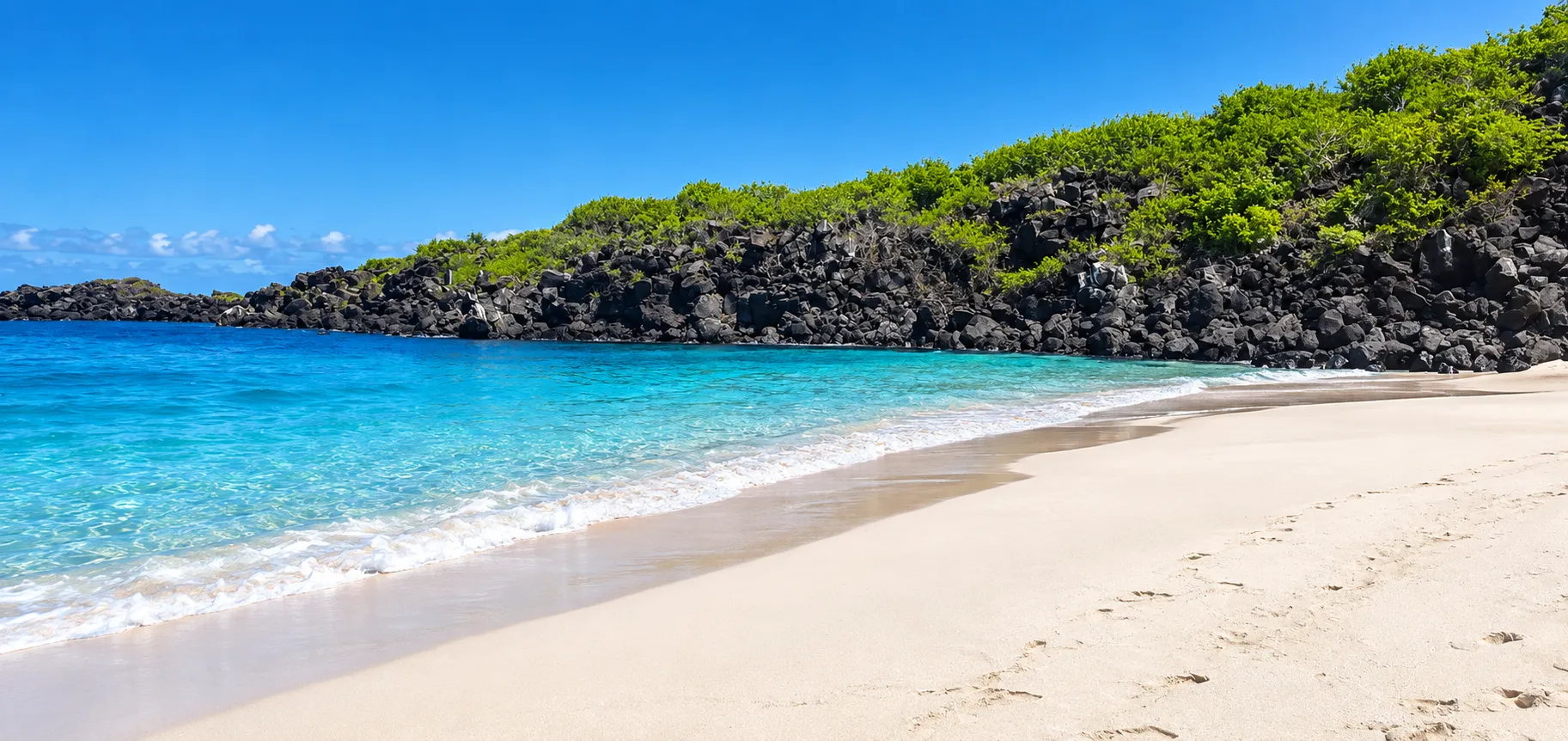
Behind the sand there is a seasonal pool or lagoon that is part of the coastal setting and offers habitat for shorebirds and migratory birds, including blue-footed boobies, frigatebirds, gulls, and pelicans. The Galápagos sea lion is part of the area's coastal fauna, where visits take place under the protected-area management authority and keeping a distance from wildlife is expected conduct. The San Cristóbal mockingbird, endemic to the island, is part of the surrounding fauna, and ghost crabs and hermit crabs may be seen on the sand. The matazarno appears as a representative plant species of the place. Swimming and snorkelling are possible activities, and rays, sea turtles, sea lions, and fish may appear in the water, always as a possibility and never as a guarantee. The protected-area management authority has recorded the beach among the San Cristóbal sites visited with park rangers during an environmental education activity about the island's ecosystems.
A white-sand beach on the north coast
Ochoa Beach is a white-sand beach with calm waters on the north coast of San Cristóbal island. The protected-area management authority has included it among the island's sites visited with park rangers during an environmental education activity about the ecosystems of San Cristóbal, which places it as a coastal site where people learn about the island's natural world.
The usual access by sea
Ochoa Beach is usually reached by sea from Puerto Baquerizo Moreno, with a landing on the beach itself.
The seasonal pool and its birds
Behind the beach there is a seasonal pool or lagoon that is part of the site's coastal setting and offers habitat for shorebirds and migratory birds. Among the birds typical of this kind of setting are blue-footed boobies, frigatebirds, gulls, and pelicans. Because the pool is seasonal, its appearance changes over time.
Essential information
- Identity
- Ochoa Beach, on San Cristóbal
- General location
- North coast of San Cristóbal island
- Site type
- White-sand beach with calm waters
- Usual access
- Usually reached by sea from Puerto Baquerizo Moreno, with a landing on the beach
- Seasonal pool
- Seasonal pool or lagoon behind the beach, with shorebirds and migratory birds
- Birds mentioned
- Blue-footed boobies, frigatebirds, gulls, and pelicans
- Sea lions
- The Galápagos sea lion (Zalophus wollebaeki) as part of the area's coastal fauna
- Rule of conduct
- Visits take place under the protected-area management authority; keeping a distance from wildlife is expected conduct
- San Cristóbal mockingbird
- San Cristóbal mockingbird (Mimus melanotis), endemic to the island
- Shoreline fauna
- Ghost crabs and hermit crabs on the sand
- Vegetation
- The matazarno as a representative plant species of the place
- Marine life as a possibility
- Swimming and snorkelling are possible; rays, sea turtles, sea lions, and fish may appear
Sea lions and the distance rule
The Galápagos sea lion, whose scientific name is Zalophus wollebaeki, is part of the island's coastal fauna, for which beaches and nearby waters are a natural setting. Its presence in the area is part of the character of the place without being something any particular visit can take for granted.
Visits to the site take place under the protected-area management authority, whose rules frame the conduct of those who visit it. Keeping a distance from wildlife, sea lions included, is part of that expected conduct, intended not to disturb the animals and to let the visit unfold without interfering with their activity.
The San Cristóbal mockingbird and the shoreline fauna
The San Cristóbal mockingbird, Mimus melanotis, is a species endemic to this island, present from the coast to the highlands, and its habitat includes the shoreline around the site. The species is a reminder that the place belongs to an island with wildlife of its own.
Ghost crabs and hermit crabs may be seen on the sand, part of the shore's usual landscape.
The vegetation and the matazarno
Among the plants of the place, the matazarno appears as a representative plant species, part of the beach's coastal landscape.
Marine life, always as a possibility
Swimming and snorkelling are possible activities at Ochoa Beach, and those who do them may come across rays, sea turtles, sea lions, and fish. None of those presences is guaranteed: they are possibilities of the site, not an offer the beach fulfils on every visit.
Sea conditions change from one moment to the next, and the expected conduct of keeping a distance from wildlife holds in the water as well.
Frequently asked questions
- A white-sand beach with calm waters on the north coast of San Cristóbal island, with a seasonal pool behind the sand.
- By sea from Puerto Baquerizo Moreno, with a landing on the beach.
- Shorebirds and migratory birds; among the birds typical of that setting are blue-footed boobies, frigatebirds, gulls, and pelicans, always as a possibility and never as a guarantee.
- The Galápagos sea lion is part of the area's coastal fauna; its presence is part of the character of the place without being something any particular visit can take for granted, and visits take place under the protected-area management authority, where keeping a distance from wildlife is expected conduct.
- A bird endemic to the island, Mimus melanotis, present from the coast to the highlands.
- They are possible activities, and rays, sea turtles, sea lions, and fish may appear, always as a possibility and never as a guarantee.