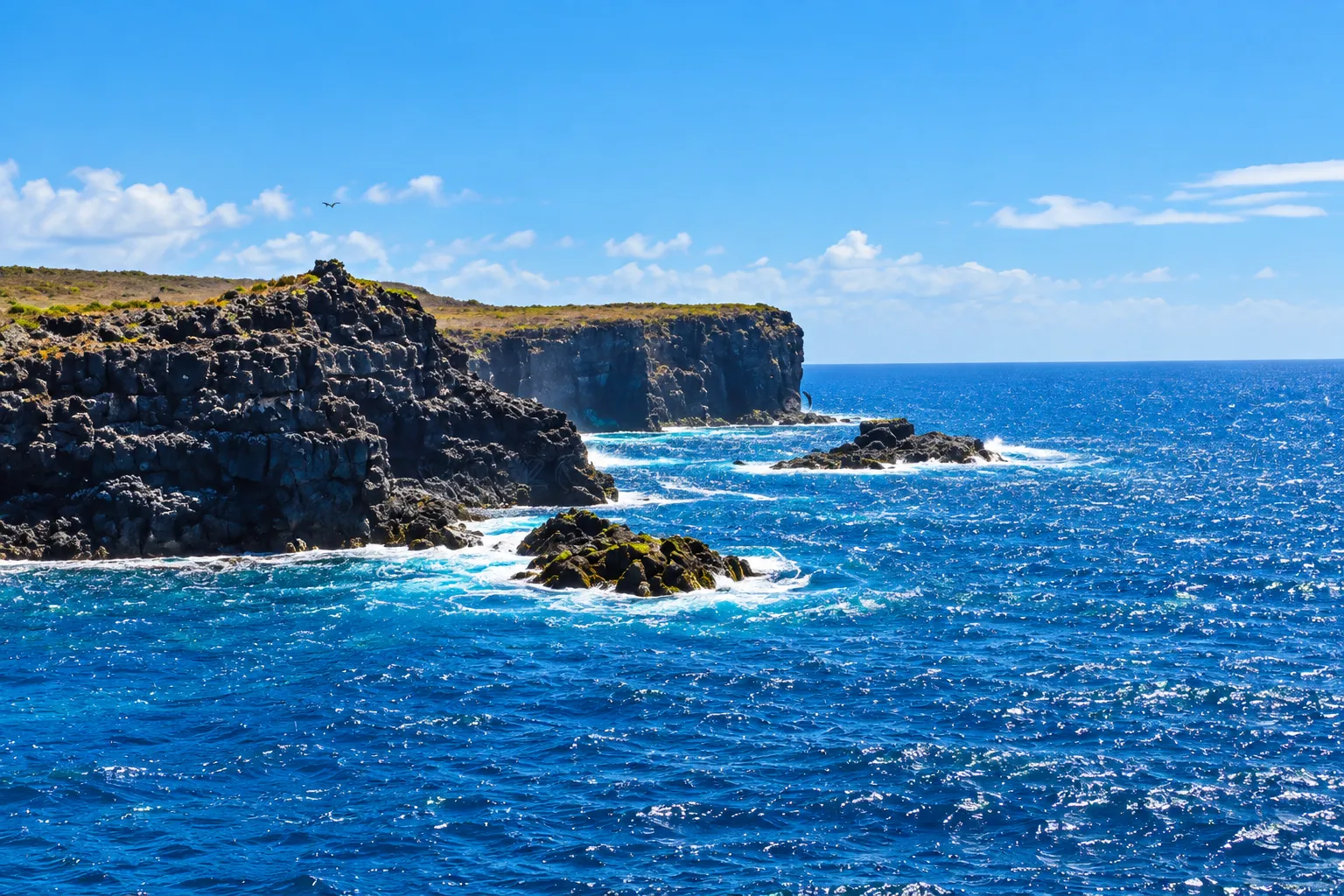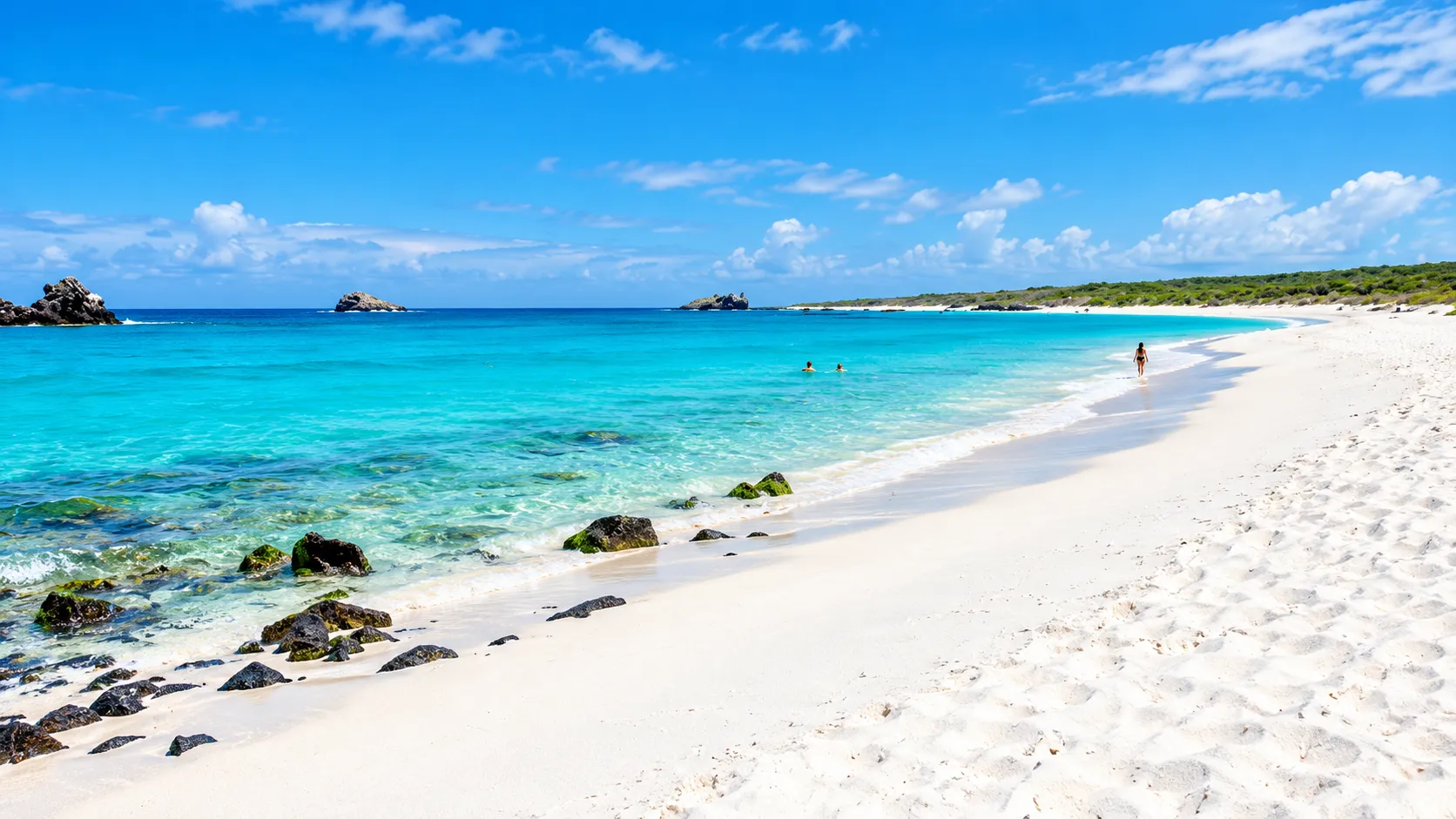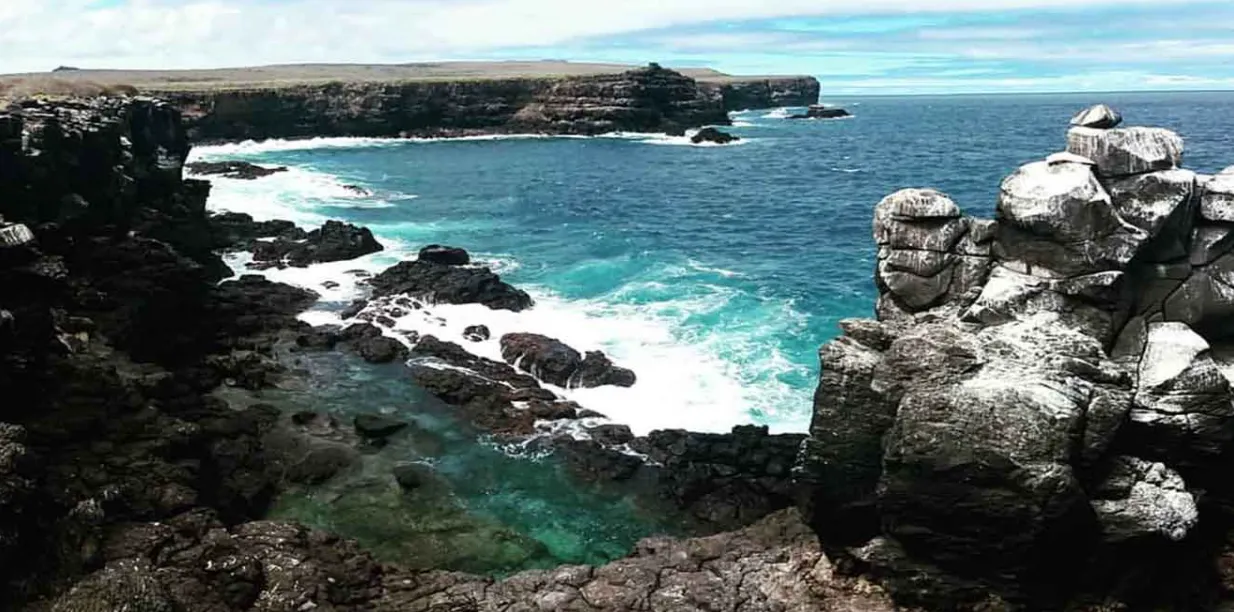
Its landscape comes from an extinct volcano reshaped by erosion, creating an editorial context for endemic species, the waved albatross as a breeding-area species, and the recovery of the Española giant tortoise.
The archipelago’s southern edge
Española Island lies at the southern edge of the Galápagos archipelago. Galápagos Conservancy records an area of 60 km² and states that the island has no resident human population. These references place its territorial scale and uninhabited character within the wider island group.
Essential information
- Location
- Southern edge of the Galápagos archipelago
- Area
- 60 km²
- Relative age
- One of the archipelago’s oldest islands
- coordinates
- -1.3666666666667, -89.683333333333
An extinct volcano shaped by erosion
Española’s landscape derives from an extinct volcano. Over time, erosion reshaped its relief and left an island of low profiles within the archipelago. This geological history makes it possible to read the territory as an older volcanic form without reducing it to an age or altitude figure.
A context for endemic species
Española’s isolation is part of the ecological context for endemic species associated with the island. Institutional sources mention the Española mockingbird, Española lava lizard, and Española giant tortoise as references for that distinctiveness. This describes ecological context rather than guaranteeing sightings.
A breeding area for the waved albatross
Española has particular importance to the waved albatross as a breeding area. The relationship between the island and this species offers a way to present the ecological value of isolated island spaces without including counts, seasons, conservation-status classifications, or observation results.
Recovery of the Española giant tortoise
The story of the Española giant tortoise can be presented as a recovery supported by management, breeding, and repatriation after a severe historical decline. It is a restoration context that avoids release totals and does not assert the current operational status of conservation programmes or actions.
Coastal landscape references
Punta Suárez and Gardner Bay are coastal and landscape references associated with Española. Their names help locate the variety of the island’s shoreline forms without turning this record into an invitation, route, activity description, or wildlife promise.
Land–sea continuity and conservation
On an isolated island, terrestrial and marine habitats form an ecological continuum. On Española, that relationship makes it possible to approach conservation as care for a landscape where coast, soil, vegetation, and ocean connect, without attributing current operations, controls, programmes, or threats.